
A Collapsing Line: The need for National Transformative Adaptation
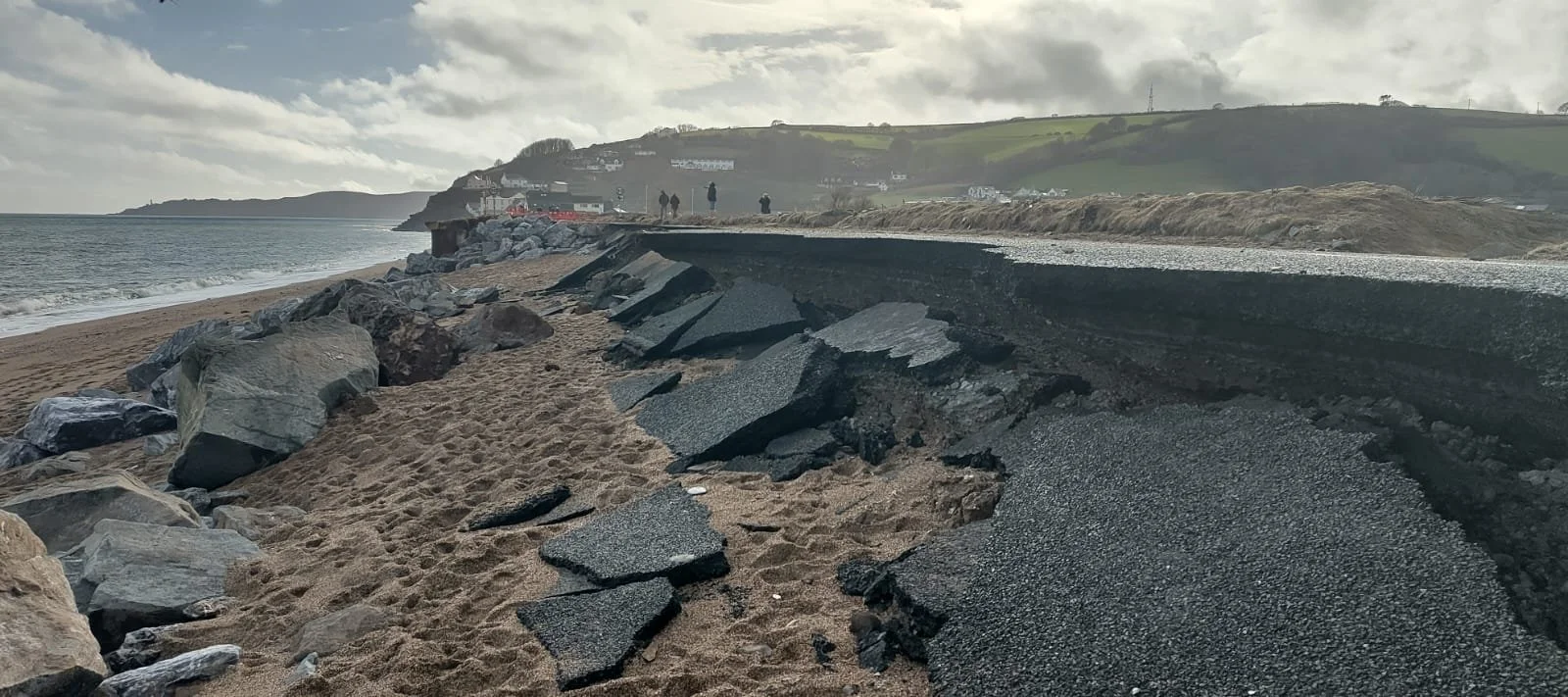
The recent storm-based erosion of the Slapton Line (Sky Miller, Feb 2026)
A really important test case has just emerged around transformative adaptation.
The Slapton Line is a famous bar of shingle, and road, that runs between Slapton Ley in South Devon and the sea. It is a road that played host to the D-Day rehearsals of American soldiers. It's also famous for its natural beauty: cutting across, and preserving, Slapton Ley - a lake and nature reserve of significant ecological interest. It's also an economic and community lifeline for the many residents who live in nearby villages.
It has also just collapsed, partially, as a result of coastal erosion - the primary enemy facing the community that of climate breakdown, rather than the Germans. The road is closed and the community are anxious. The local council have said they don't have enough money to fix the road themselves, and have already invoked anger in suggesting the closure may be permanent.
What is the point of spending millions, year after year, to restore a road?
Two things: community and ecological value. The shingle bar of Slapton Line preserves Slapton Lee: a 3000 year old lake that is a national nature reserve and site of special scientific interest. There are around 3000 species of fungi here, 21 of which were discovered to be new to science. It is also the only established location of the plant Strapwort, which is critically endangered in the UK. The ecological value and Beauty of this place brings tourists to the Slapton Line, who spend millions on the local businesses in the area. The road provides fast transport links - not only for commuters, but ambulances and neighbours. Rebuilding the road, therefore, is of benefit to human and non-human alike.
Our breaking climate requires adaptation on a vast National scale - and adaptation that is Transformative - with local communities and nature at its heart. This is adaptation that comes from the bottom-up and is creating greater safety and resilience in humans and non-humans. The UK Government has the means to prioritise adaptation: to create a separate Ministry, to give serious national funding to vulnerable communities all over the country.
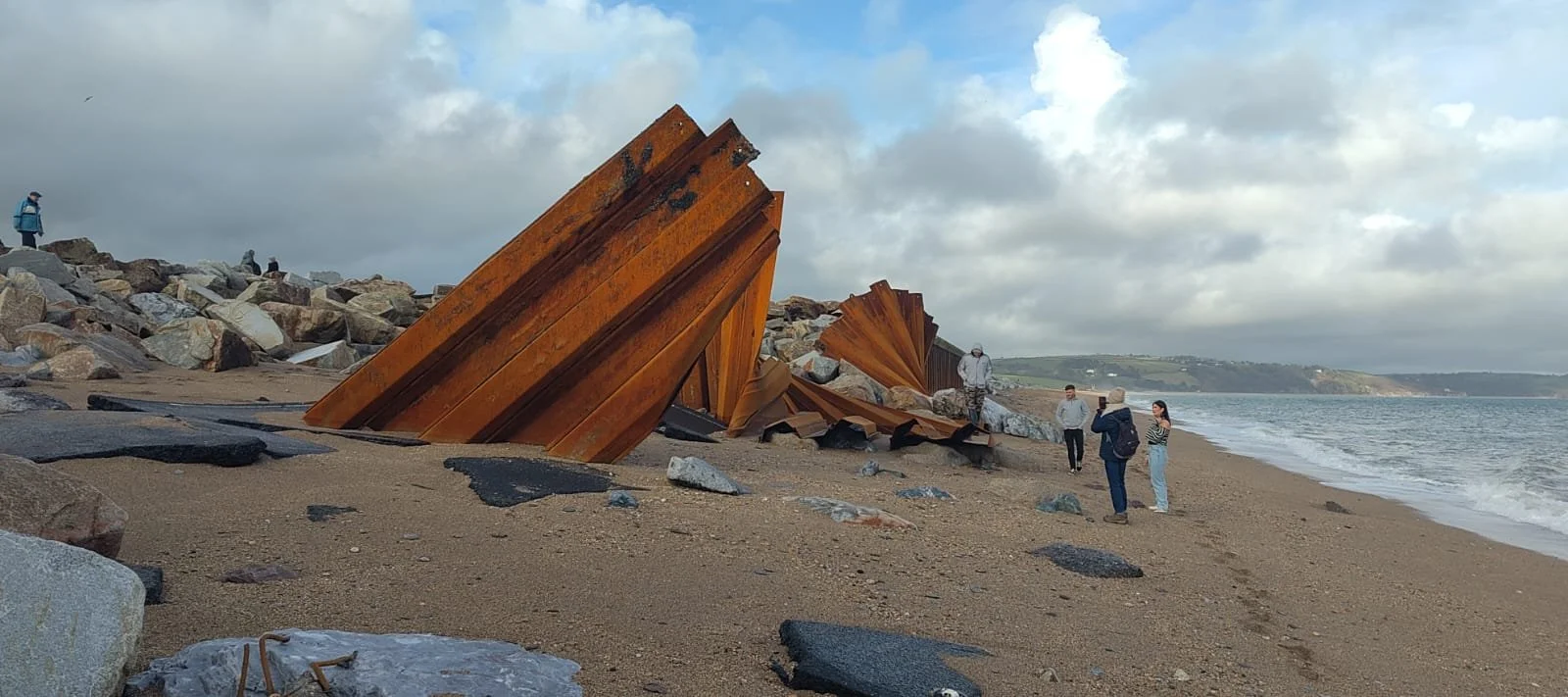
The exposed, broken sea defenses (Sky Miller, Feb 2026)
The wider questions tested by the Slapton Line case, are how much do we value our local communities and their cultures? How much do we value Nature? In the context of climate breakdown, these will be asked of our leaders more and more and more.
So, let’s give them our answer.
Local MP Caroline Voaden has set up a petition that urges the government to support coastal communities affected by coastal erosion in Start Bay, including the villages of Torcross, Beesands and Hallsands, in the short and long term.
Sign it here to show your support. We are all in this together.
For more information on the recent events, see these articles:
Fixing collapsed road 'out of council price range'
MP starts petition after coastal road collapse